Ph.D. Candidate · Political Science & Social Data Analytics · Penn State
I study how authoritarian regimes—China in particular—exert influence within democracies, and why some democracies are more resilient than others.
Introduction
Hello, welcome to my page. I’m a Ph.D. candidate at Penn State, pursuing a dual-title degree in the Department of Political Science and the Center for Social Data Analytics (SoDA). I study how authoritarian powers—China in particular—influence democracies, and why some publics and institutions prove more resistant than others. I work mainly with survey experiments, causal inference, and text and computational methods.
My dissertation, The Authoritarian Playbook, examines three channels of authoritarian influence in democracies: propaganda that reshapes how citizens recognize democracy, skepticism that erodes public trust in security allies, and financial ties that reach into democratic legislatures—with empirical work centered on Taiwan and Australia. A related project carries these questions into generative AI, asking how Chinese open-weight language models handle politically sensitive content.
Prior to Penn State, I received my master’s degree in Political Science from National Taiwan University and a bachelor’s degree in Political Science from National Cheng Kung University.
What I work on
My research asks how authoritarian regimes—China in particular—exert influence within democracies, and why some democracies prove more resilient than others. I build the original data my questions require: population-based survey experiments in Taiwan, two decades of linked donation and parliamentary records in Australia, and large-scale audits of Chinese AI models. Drafts are available upon request.
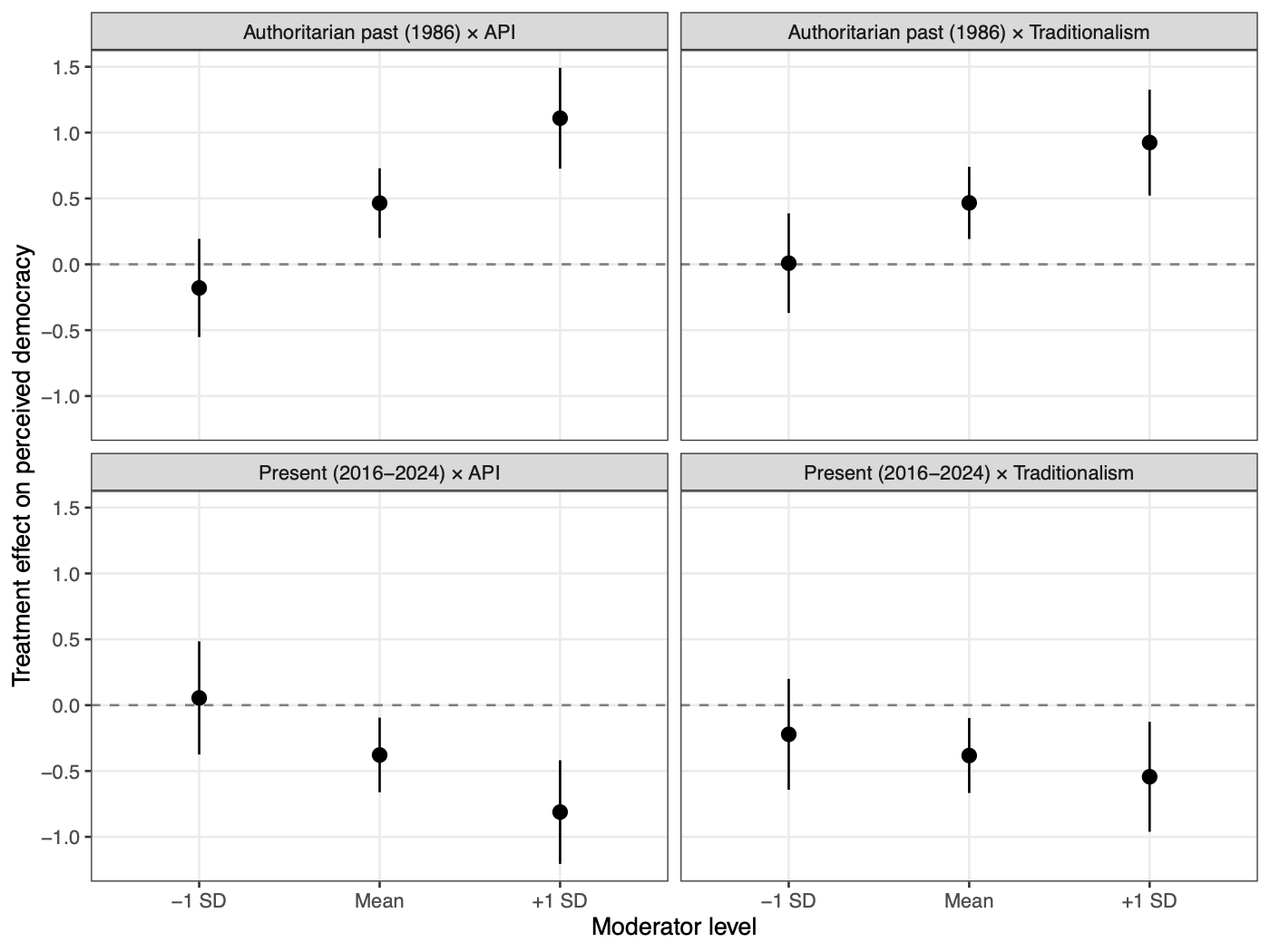
Research on authoritarian influence largely asks whether propaganda changes citizens’ attitudes toward particular actors, institutions, or policies. This paper asks whether it can move something more fundamental: the standards citizens use to recognize democracy itself. China’s 2021 white paper, China: Democracy That Works, rebrands the hallmarks of authoritarian rule—order, unity, harmony, and effective governance—as the criteria by which governance should be judged democratic. In a survey experiment in Taiwan built on the white paper’s own text, I find that exposure narrows the perceived distance between Taiwan’s authoritarian past and democratic present, with the largest effects among respondents most predisposed toward authoritarian values.
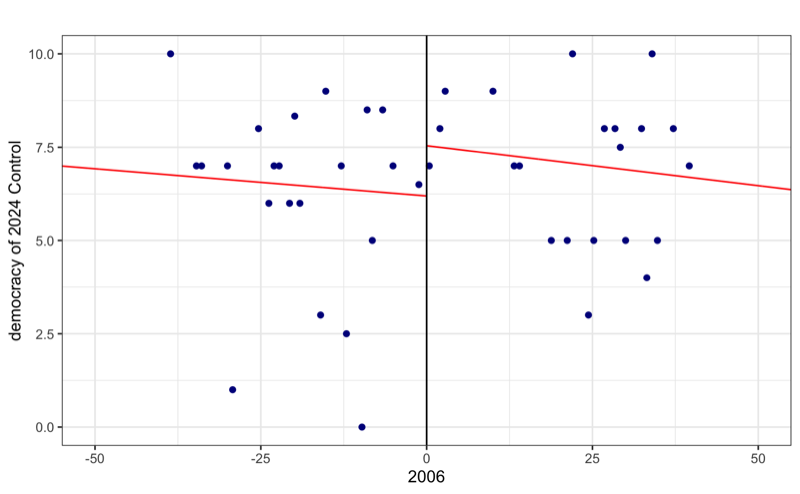
What protects citizens against propaganda? Taiwan’s 2006 curriculum reform brought the history of democratization into national schooling. Using respondents’ birth months in a regression discontinuity design, I find the reform buffers post-reform cohorts against precisely this propaganda: without propaganda the discontinuity is negligible, but under exposure post-reform cohorts maintain their evaluations of democracy—a result that identifies democratic education as a source of democratic resilience.
Research on alliance credibility has focused on how patrons signal commitment and how allied governments and elites judge those signals—but the mass public of the protected ally remains largely unstudied, even though a commitment like the United States’ to Taiwan must both deter Beijing and reassure Taiwanese society. In a survey experiment, I compare “U.S.-skepticism” narratives about security with narratives about trade: because a trade narrative says nothing about defense, any effect it has on security judgments reveals how doubt spills across domains. Early results show that economic skepticism erodes confidence in U.S. security commitments more than military skepticism does—a finding with direct implications for how democracies defend against narratives that never mention defense.
We know a great deal about how domestic interest groups buy access in democratic legislatures; we know far less about whether foreign authoritarian donors do the same. Assembling two decades of Australian campaign-finance and parliamentary records, I find that China-linked donations cluster significantly around the foreign-affairs committee network, while timing tests show the money does not chase individual legislators’ committee assignments—a pattern consistent with cultivating durable access rather than transactional exchange. The chapter’s contribution is the idea of democratic mimicry: foreign authoritarian actors replicating the strategies of domestic influence-peddlers inside a democracy’s own open institutions.
Authoritarian censorship has always run through infrastructure the state controls—newspapers, platforms, firewalls. This research program studies what happens when it moves inside a product anyone can download: Chinese open-weight language models now anchor local AI deployment worldwide, and because they run offline, any censorship they carry from China must be built into the model itself.
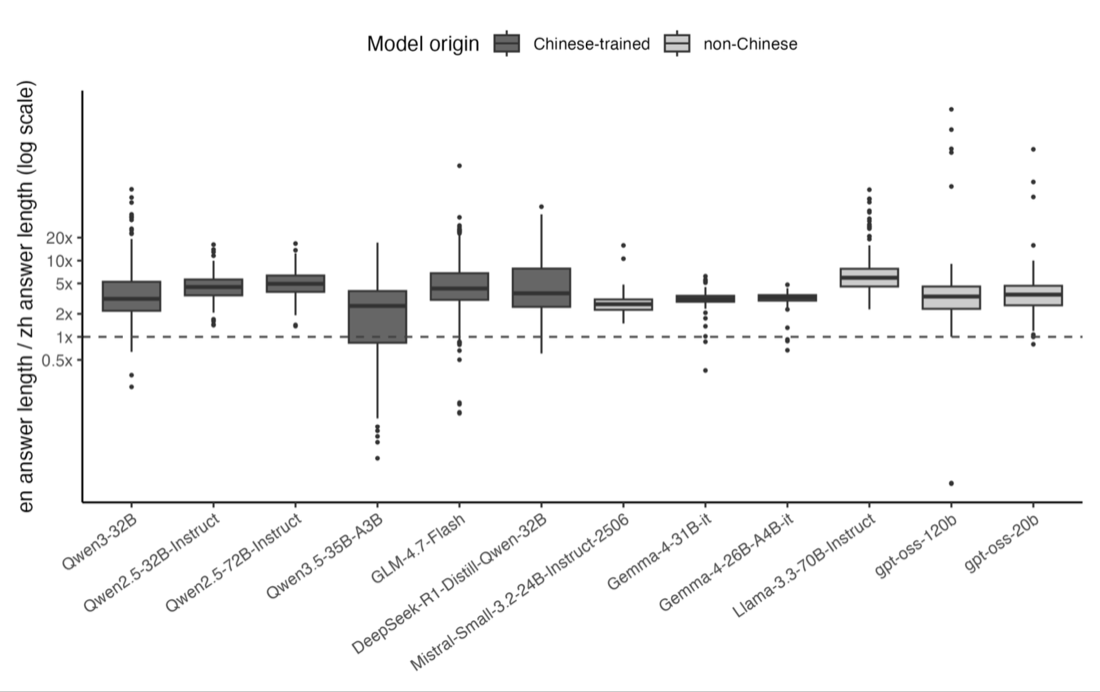
Running twelve Chinese and non-Chinese models locally for over 50,000 replicable responses on sensitive topics, I find that Chinese models rarely refuse: they reframe, recasting politically sensitive questions in safer registers at seven times the rate of non-Chinese models. The strategic distraction that previous scholars documented on Chinese social media now operates from inside model weights.
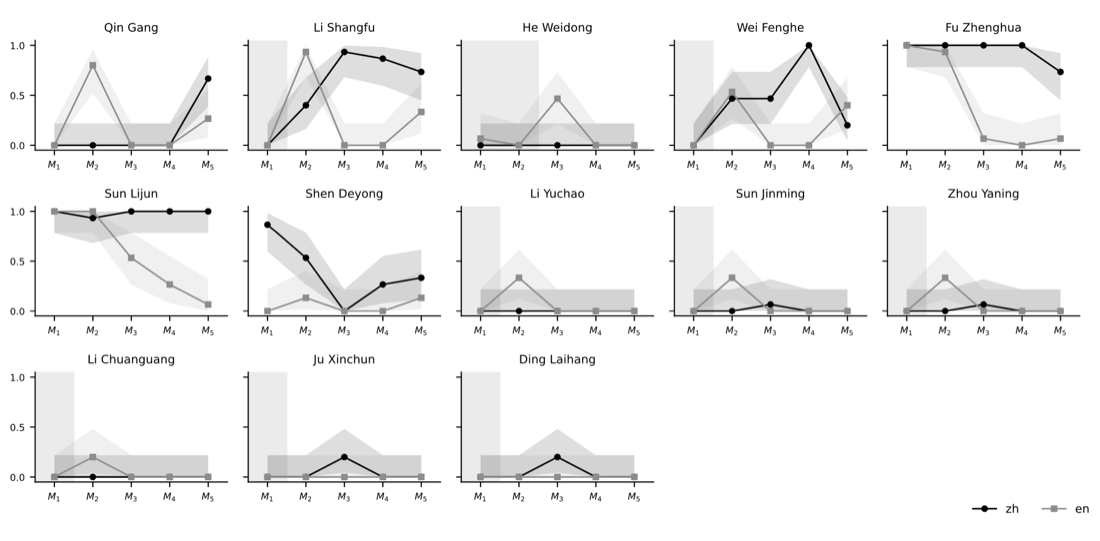
Following the record of China’s purged elites across five successive generations of the Qwen family, I find the models withholding facts they demonstrably possess: later generations conceal officials’ downfalls that earlier generations had inadvertently disclosed, and questions asked in English open a further breach in the wall. Having ruled out insufficient model capacity, I find the erasure is selective, not ignorant. The paper develops an audit design that separates what a model cannot answer from what it chooses not to answer.
A cross-national study of how Chinese Communist Party campaigns promoting “Chinese-style democracy” shape public opinion and partisan polarization in East Asia. Conjoint designs ask citizens to trade off competing democratic attributes.
Studies survey attentiveness as a behavior that questionnaire design can improve rather than a fixed trait to screen out, testing visual emphasis and real-time corrective feedback in a factorial experiment.
How do electoral incentives in Taiwan’s mixed-member system shape competition over legislative committee assignments? A congressional counterpart to the committee politics of my Australia chapter.
In print
Off the clock
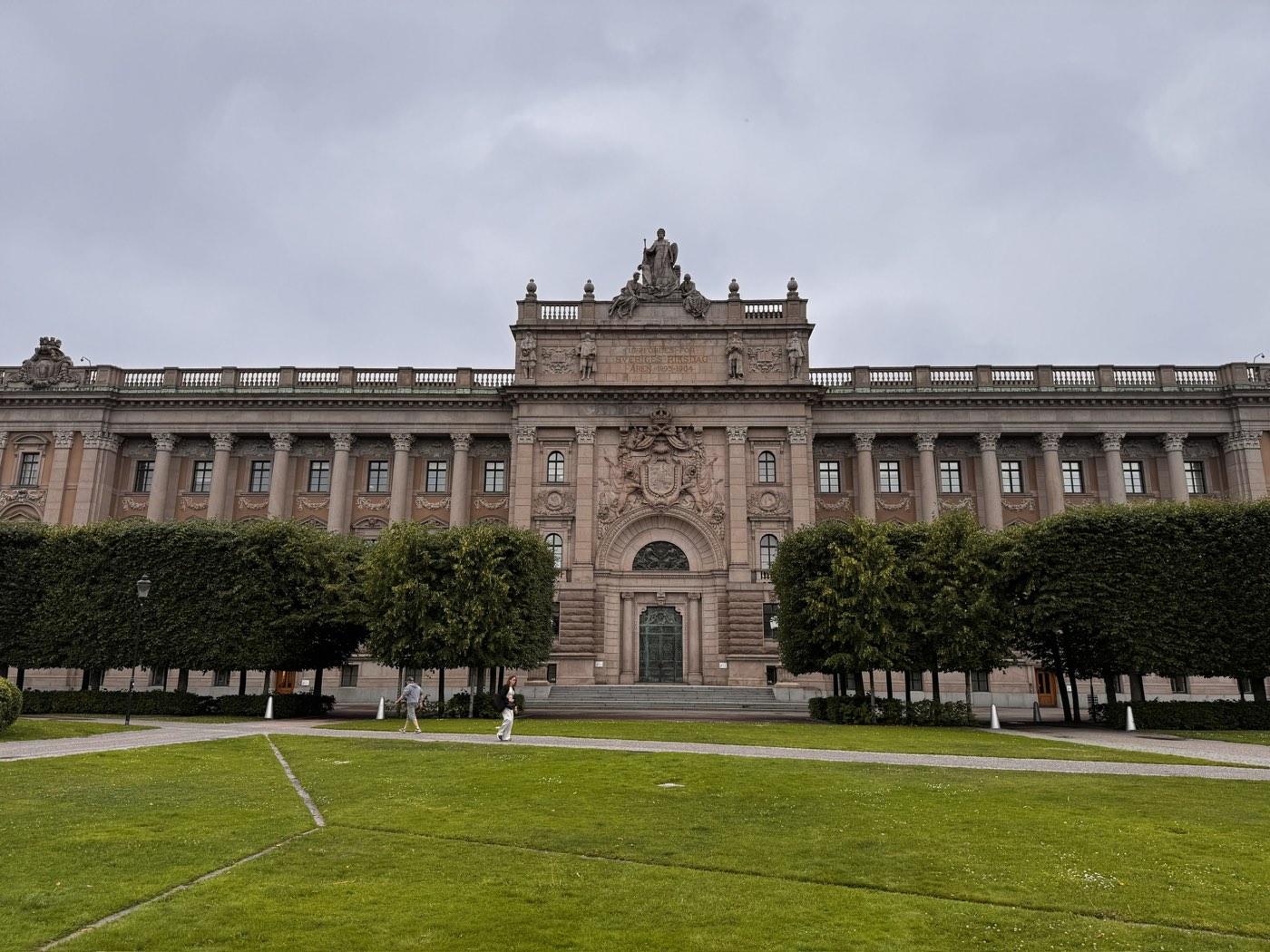
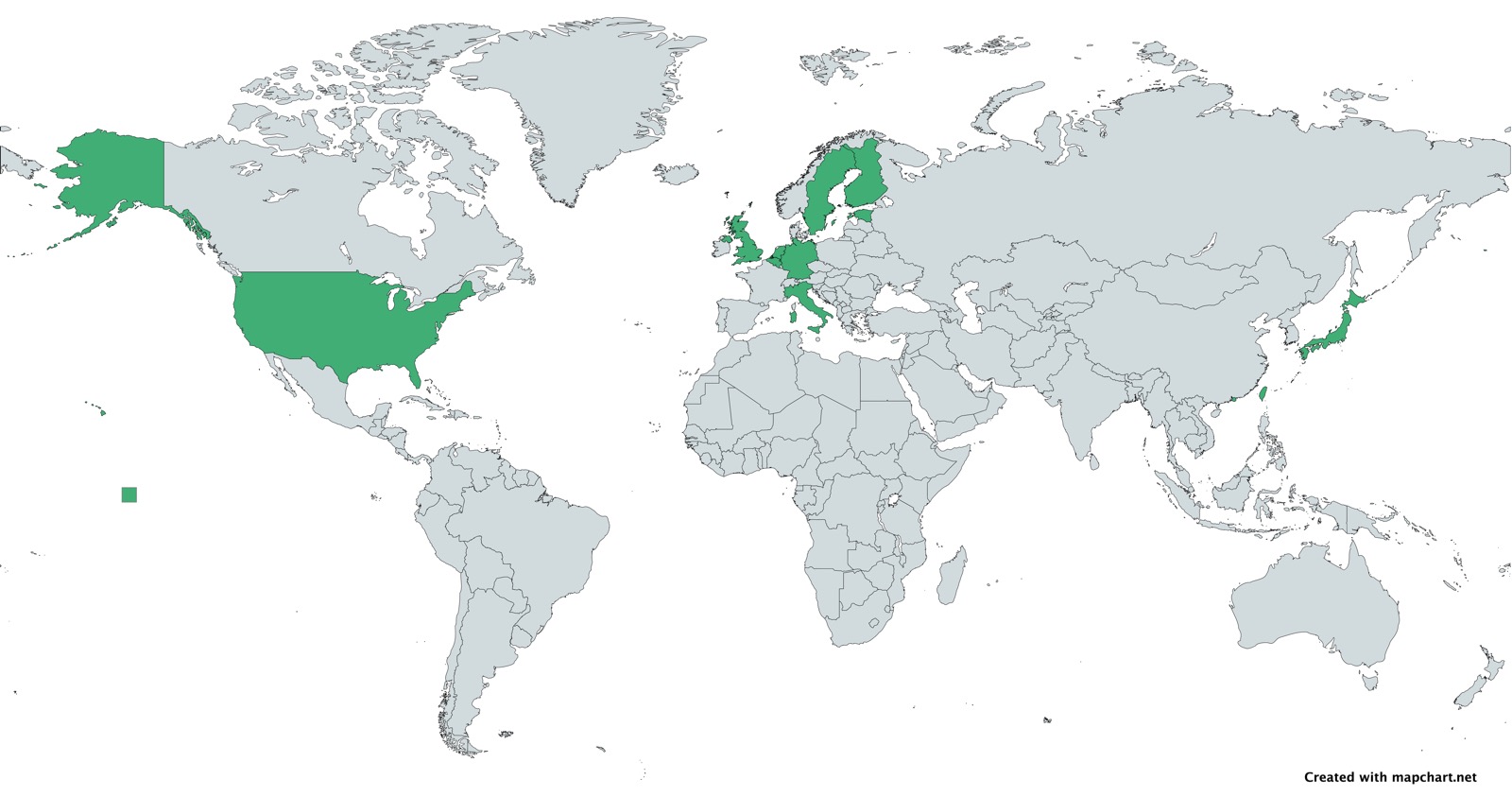
A few photographs from parliaments and capitols I have visited.