YiMin Huang
Hello, welcome to my page. I'm a Ph.D. candidate at Penn State, pursuing a dual-title degree in the Department of Political Science and the Center for Social Data Analytics (SoDA). I study how authoritarian powers—China in particular—influence democracies, and why some publics and institutions prove more resistant than others. I work mainly with survey experiments, causal inference, and text and computational methods.
My dissertation, The Authoritarian Playbook, examines three channels of authoritarian influence in democracies: propaganda that reshapes how citizens recognize democracy, skepticism that erodes public trust in security allies, and financial ties that reach into democratic legislatures—with empirical work centered on Taiwan and Australia. A newer project carries these questions into generative AI, asking how Chinese open-weight language models handle politically sensitive content.
Prior to Penn State, I received my master's degree in Political Science from National Taiwan University and a bachelor's degree in Political Science from National Cheng Kung University.
For more information about me, you can view my CV or email me.
Publications
Articles
Yu-Tzung Chang, Huan-Kai Tseng, and YiMin Huang. (2022) “Application of Online Survey Methods in Social Science: A Case Study of the National Taiwan University Websurvey.” (Chinese) Humanities and Social Sciences Newsletter Quarterly. 23(4):47-54
Master Thesis
2024: Framing Democracy: China’s Propaganda and Its Influence on Taiwanese Democratic Perceptions
2021: How International Linkages Shape the Transition of Democracy in Competitive Authoritarianism? An ICEWS Database Analysis (1995-2018) (Master Thesis)
Research
A few projects I'm currently working on. Drafts are available upon request.
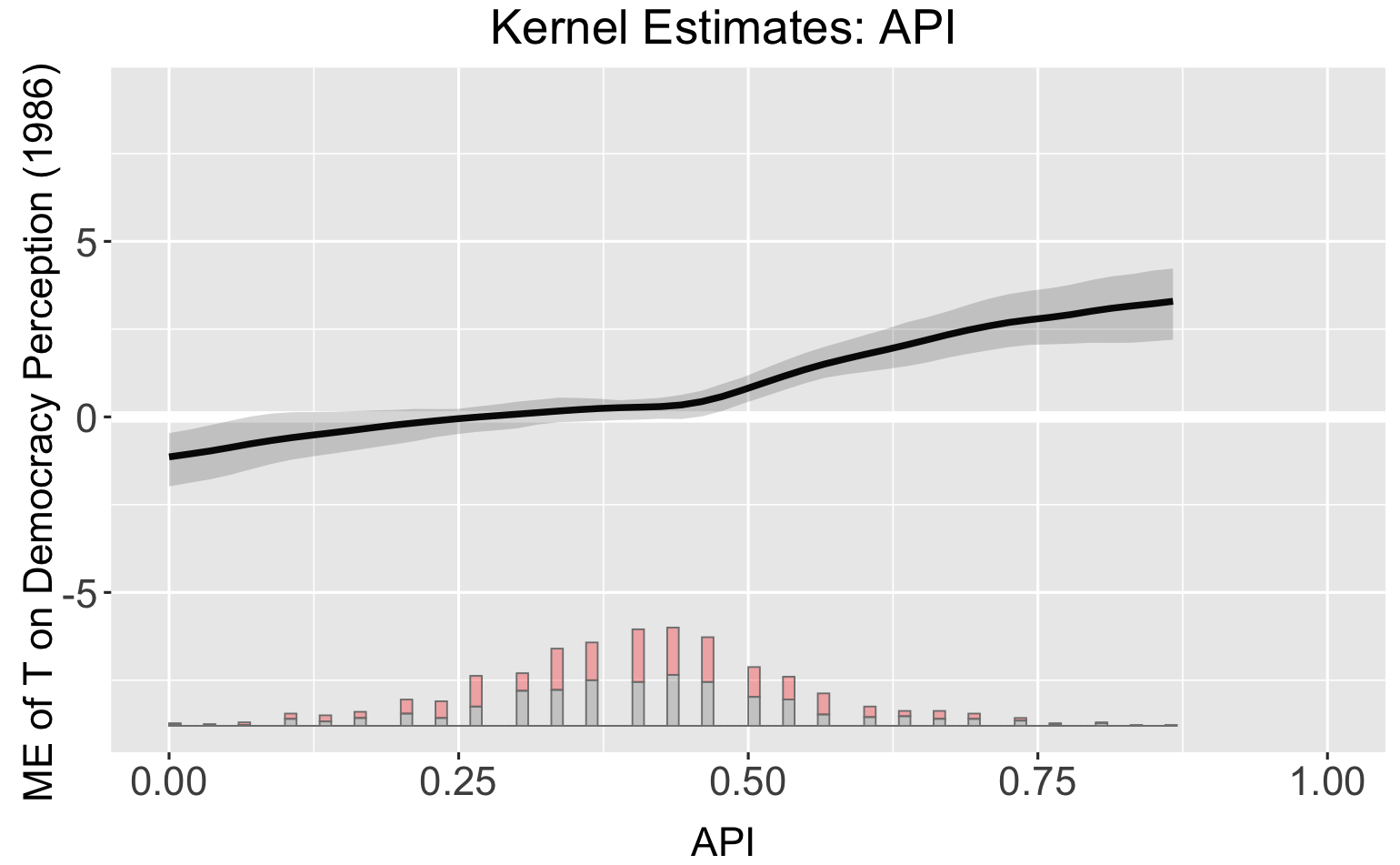
Framing Democracy (job market paper). Can foreign authoritarian rhetoric change how citizens recognize democracy? In a survey experiment in Taiwan, exposure to China's "democracy" narrative shifts how democratic people judge the country's authoritarian past and democratic present—an effect concentrated among those with stronger authoritarian predispositions, as the figure suggests. Draft available upon request.
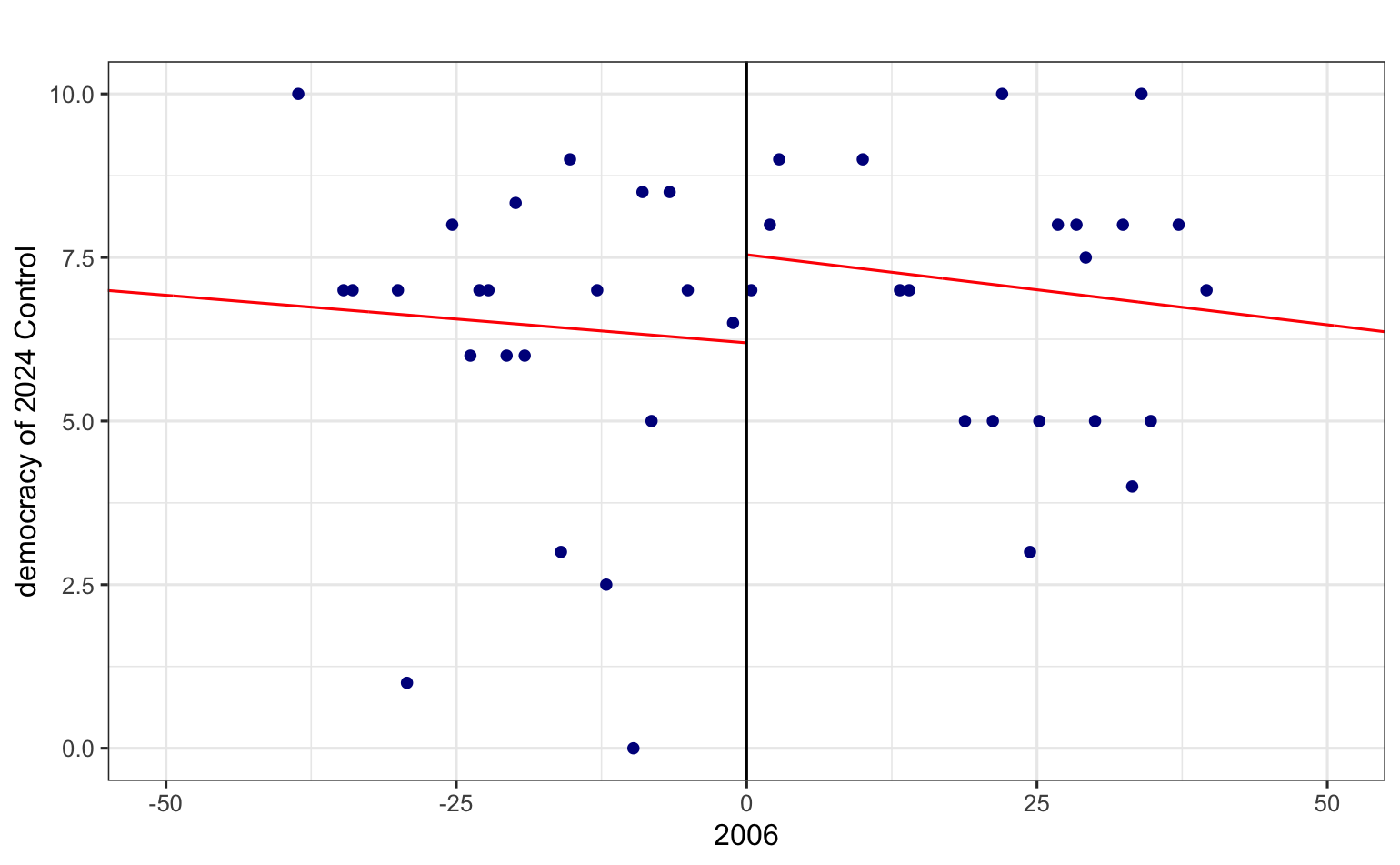
Democratic education and resilience. Does democratic education protect against propaganda? Using Taiwan's 2006 curriculum reform in a regression discontinuity design, I find that cohorts taught a democracy-focused curriculum are more resistant to the same rhetoric. Working paper.
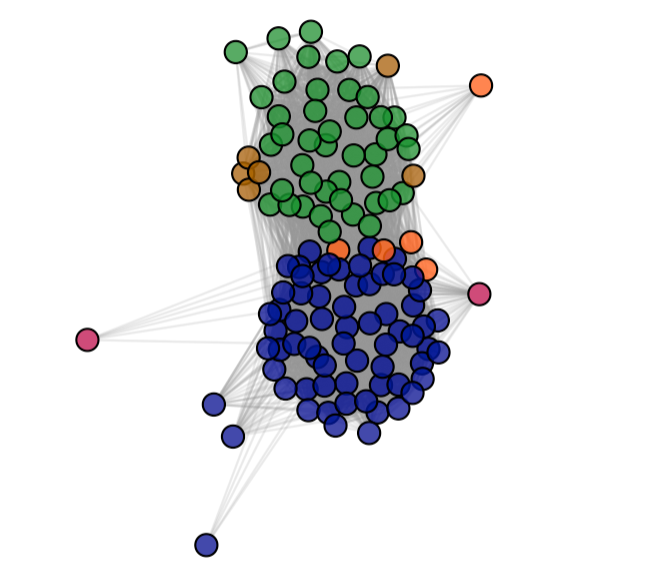
Reelection pressure and cross-party cosponsorship. How do electoral incentives shape when legislators in Taiwan's Legislative Yuan reach across party lines? Ongoing project.
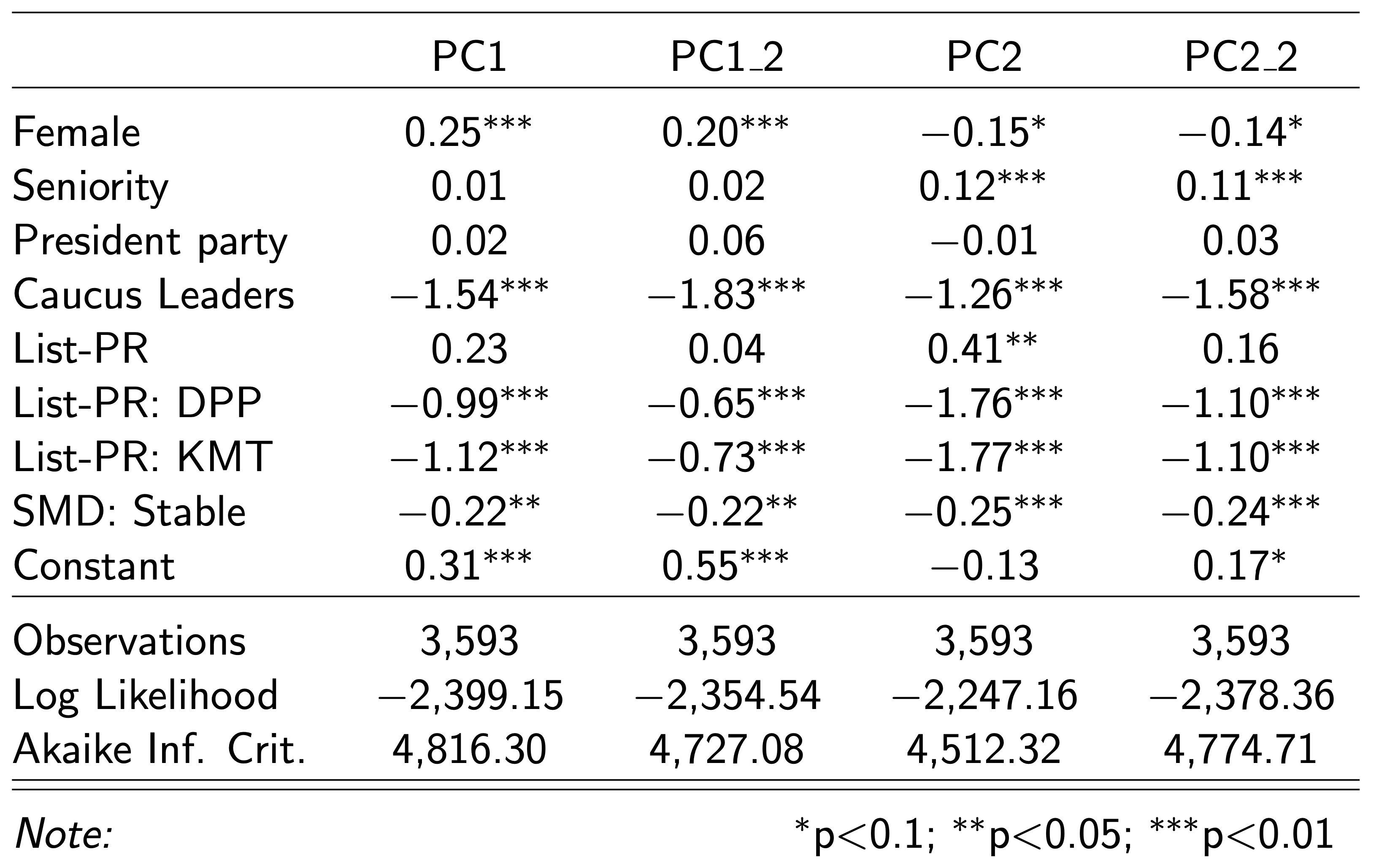
The most sought-after committee seats. Which committee assignments in Taiwan's Legislative Yuan are most contested, and how stable are they over a legislator's career? Ongoing project.
CV (updated June 2026)
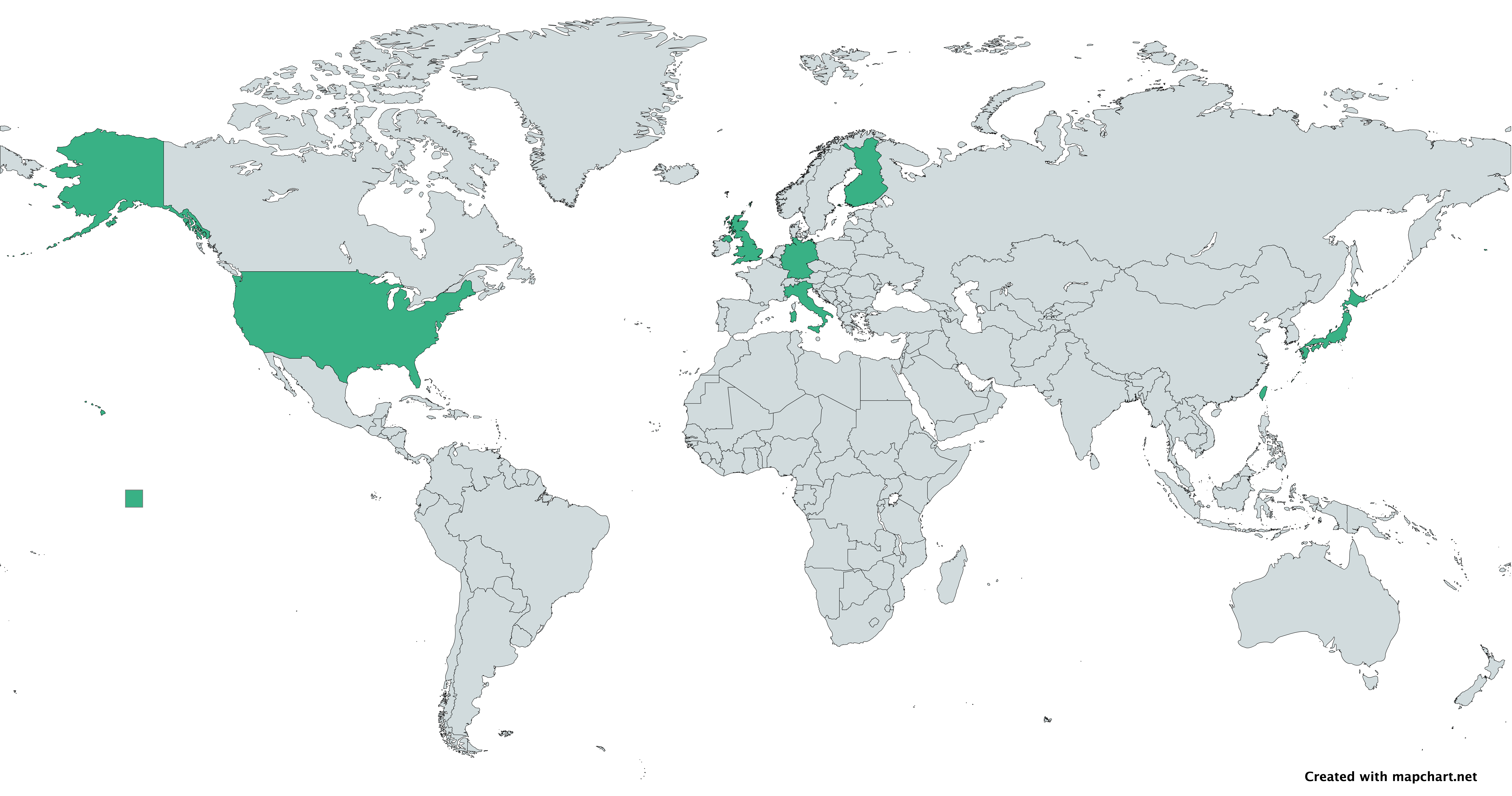
Parliaments visited. (updated Sep 2025)